Most companies no longer run their own servers. They rent them from a cloud provider. AWS, Microsoft Azure and Google Cloud are the three you will meet most.
The words you will see on every screen
- Account, subscription or project: the container everything sits in. AWS calls it an account, Azure a subscription, Google Cloud a project. Companies keep production in a separate one from development and testing.
- Region: where the data physically is, such as Mumbai (ap-south-1) or Frankfurt.
- Availability zone: a separate data centre inside a region. Spreading across zones keeps a service running if one fails.
- Console: the website you click around in. The same actions can also be done by code, which is how most engineers work.
The shared responsibility model
The provider secures the cloud itself: buildings, hardware, the network underneath. The customer secures what it puts in the cloud: who can log in, how data is encrypted, which ports are open.
This is why a company's SOC 2 report often carves out the cloud provider. The provider has its own SOC 2 and ISO 27001 reports, which customers download from AWS Artifact, the Microsoft Service Trust Portal or Google Cloud's compliance reports manager.
What this means for evidence
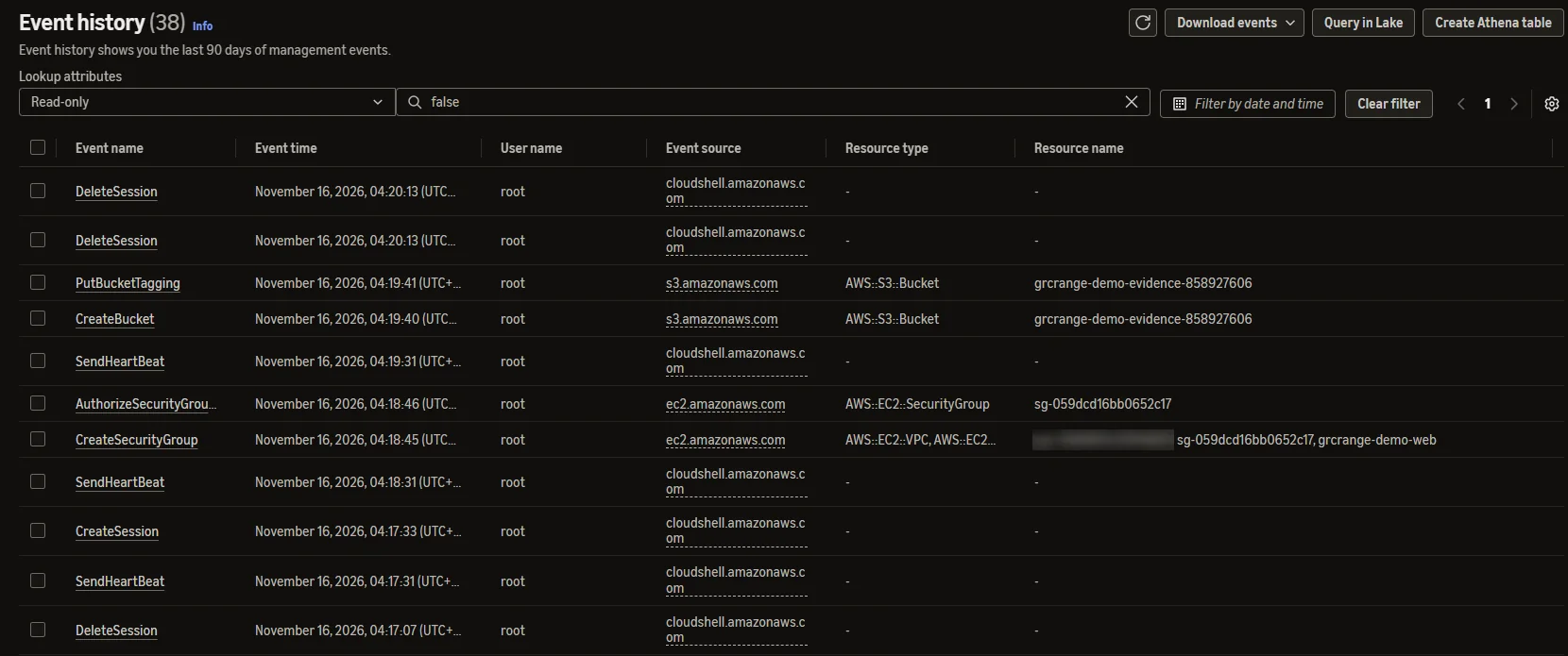
Every cloud screenshot should show which account and which region it came from, and when it was taken. A setting proven in the development account proves nothing about production.
org-audit-trail
- LoggingOn2
- Multi-region trailYes3
- Apply trail to my organizationEnabled for all accounts
- Log file validationEnabled4
- S3 bucketcomplyoo-audit-logs (Object Lock: Compliance, 400 days)
- Management eventsRead and write
- 1Date of capture. For a Type II, take this more than once across the period, or show it was never turned off.
- 2Logging is on. This is the control itself.
- 3Multi-region. A single-region trail leaves gaps attackers use.
- 4Log file validation and Object Lock show the logs are protected from tampering.
Weak version: Single region, in one account only. The auditor will ask about every other region and account, and logging gaps there are a finding.

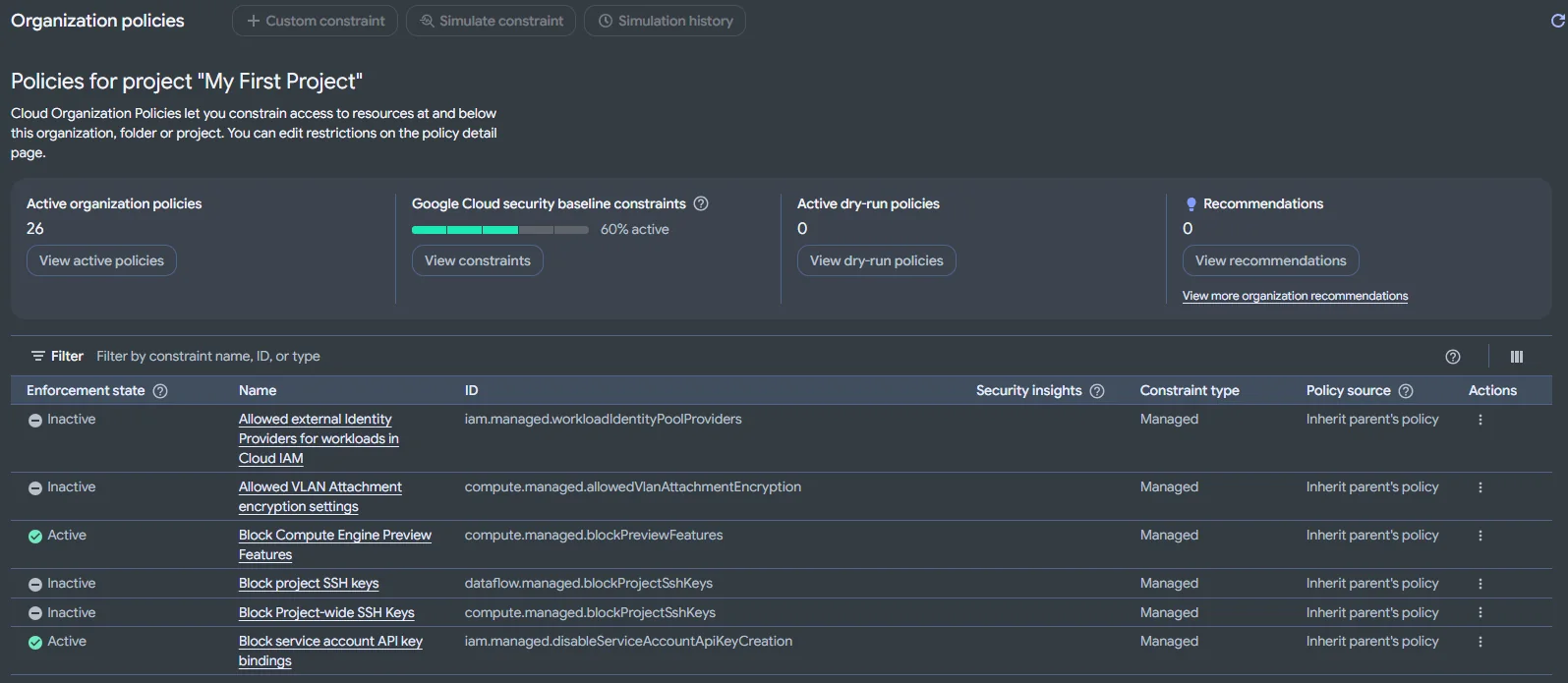
Organization policies: complyoo.com
- Disable service account key creationEnforced2
- Domain restricted sharingEnforced: complyoo.com only3
- Enforce uniform bucket-level accessEnforced
- Restrict public IP access on Cloud SQLEnforced
- 1Date and organisation. Org-level policies cover every project.
- 2No long-lived service account keys, a common source of leaks.
- 3Data cannot be shared outside the company domain.
Weak version: Policies set on one project only. Other projects are unprotected.
The provider secures the cloud. You secure what you put in it.
1. Who is responsible for configuring who can log in to a company's AWS account?
2. Evidence shows MFA is on in the development account. Does that prove it for production?
3. Where would a customer get AWS's own SOC 2 report?