Two numbers that define recovery
- RPO (recovery point objective): how much data the business can afford to lose. Daily backups mean an RPO of about 24 hours.
- RTO (recovery time objective): how quickly systems must be working again.
Both are usually promised to customers, so auditors test against them.
Backup is not replication
Replication copies data to another place in real time, which helps if a data centre fails. But if data is deleted or encrypted by ransomware, replication copies the damage too. Backups are point-in-time copies you can go back to.
Protecting the backups
Attackers go after backups first. Immutable backups, such as AWS Backup Vault Lock or S3 Object Lock, cannot be deleted or changed, even by an administrator, for a set period.
What this means for evidence
- The backup plan: what is backed up, how often, and kept for how long.
- Job history for the period: completed, and failures handled.
- A restore test with the date, the system, the time taken against the RTO, and a sign-off. This is the evidence most often missing.
Backup jobs: last 7 days
| Resource | Plan | Started | Status2 | Vault |
|---|---|---|---|---|
| rds:complyoo-main | daily-35d | 2026-09-30 01:00 | Completed | prod-vault (locked) |
| efs:uploads | daily-35d | 2026-09-30 01:00 | Completed | prod-vault (locked) |
| rds:complyoo-main | daily-35d | 2026-09-29 01:00 | Failed, retried 03:00 Completed | prod-vault (locked)3 |
- 1Export date and account.
- 2Status per job.
- 3A failure that was noticed and retried. Evidence of monitoring, not a problem.
Weak version: The backup plan configuration with no job history. It shows backups are planned, not that they ran.
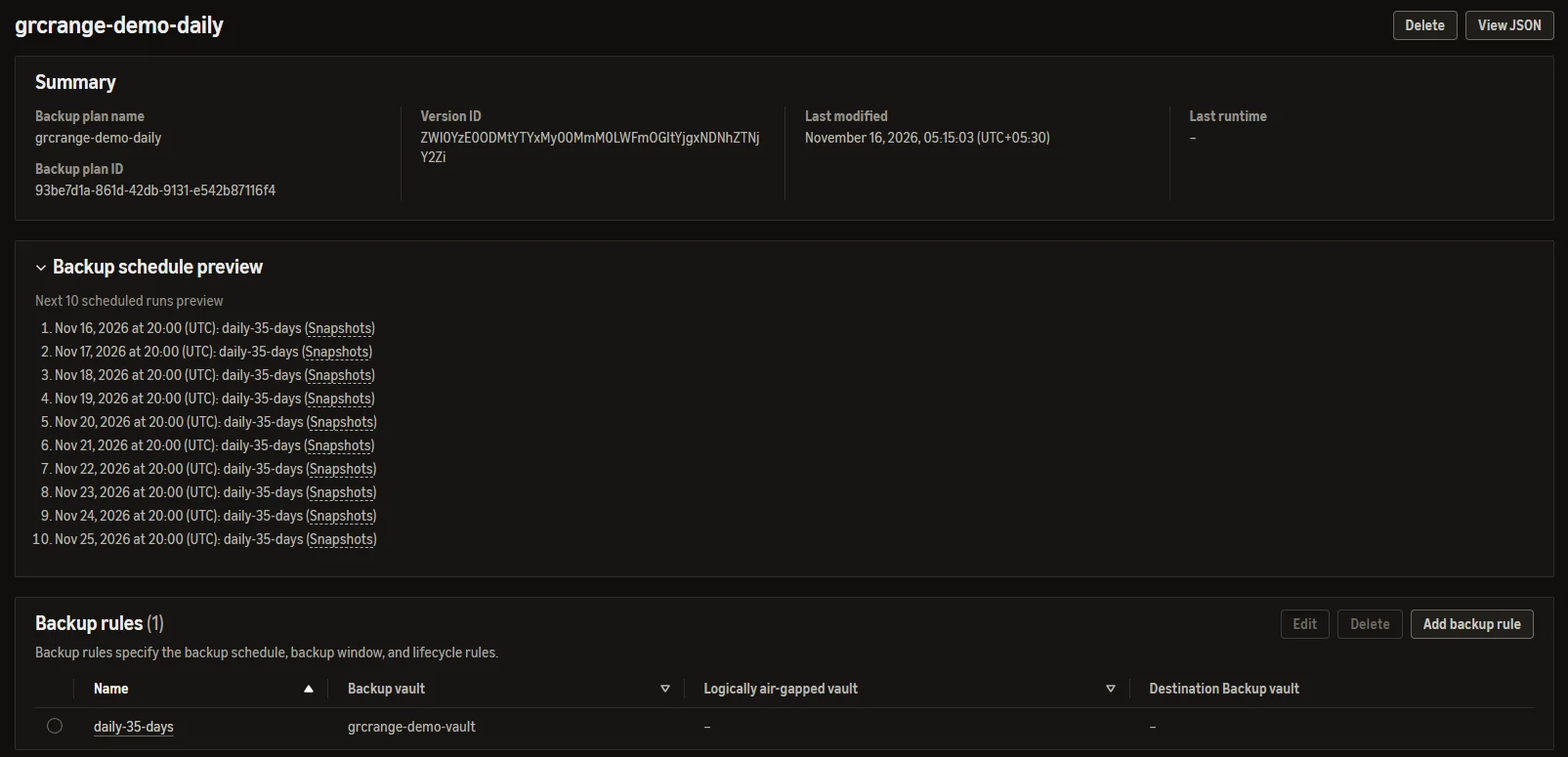
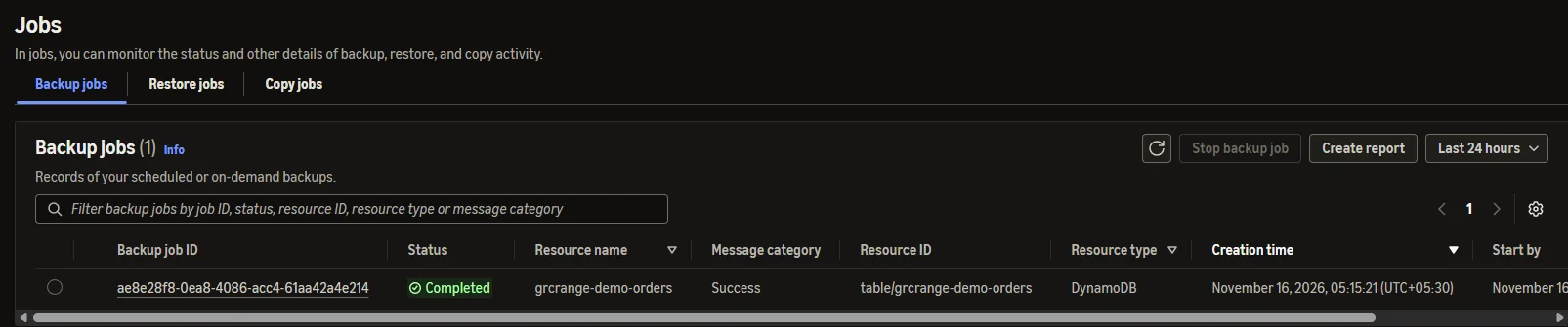
OPS-318 Quarterly restore test: complyoo-main database
- Performed
- 2026-09-24 by maria.s1
- Restored from
- Snapshot of 2026-09-23 01:00 into an isolated account
- Result
- Restored in 41 minutes. Row counts matched. RTO target 4 hours met.2
- Signed off
- David E. on 2026-09-253
- 1Who did it and when.
- 2What was restored, how long it took, and whether data checked out, against the RTO.
- 3A reviewer signed off.
Weak version: "Restore tested, all good." No system, time taken or validation.
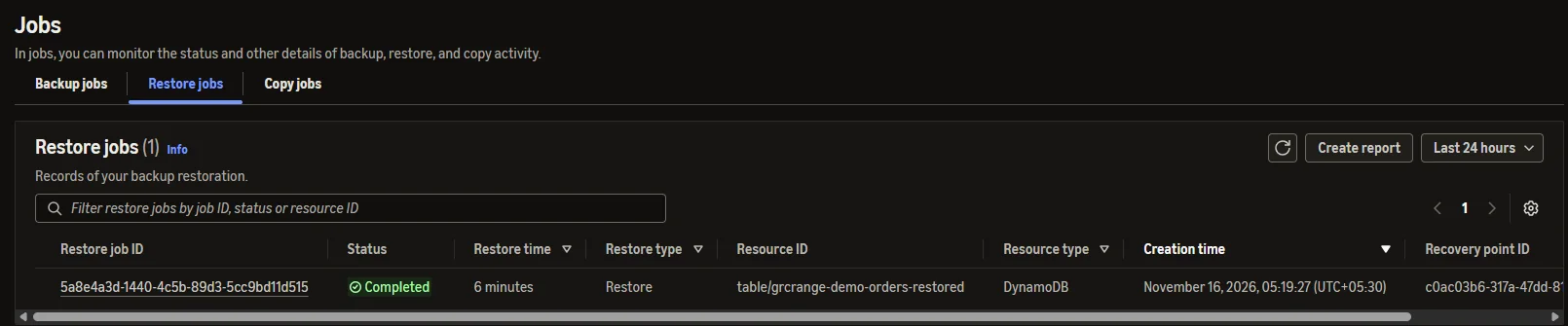
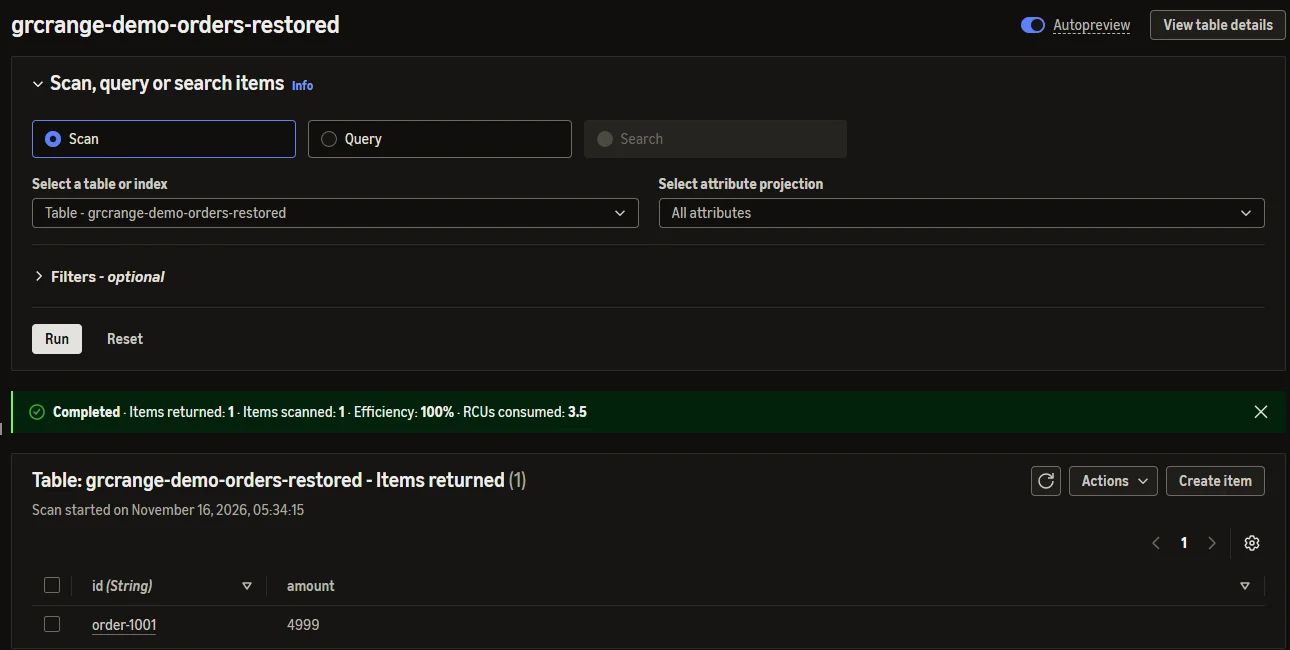
An untested backup is a hope, not a control.
1. The business can lose at most 4 hours of data. That is the...
2. Why doesn't replication replace backups?
3. Which evidence is most often missing?